
Categories
Agent Education, Financial LiteracyPublished September 7, 2026
Your Database Is a Listing Pipeline, Not a Contact List

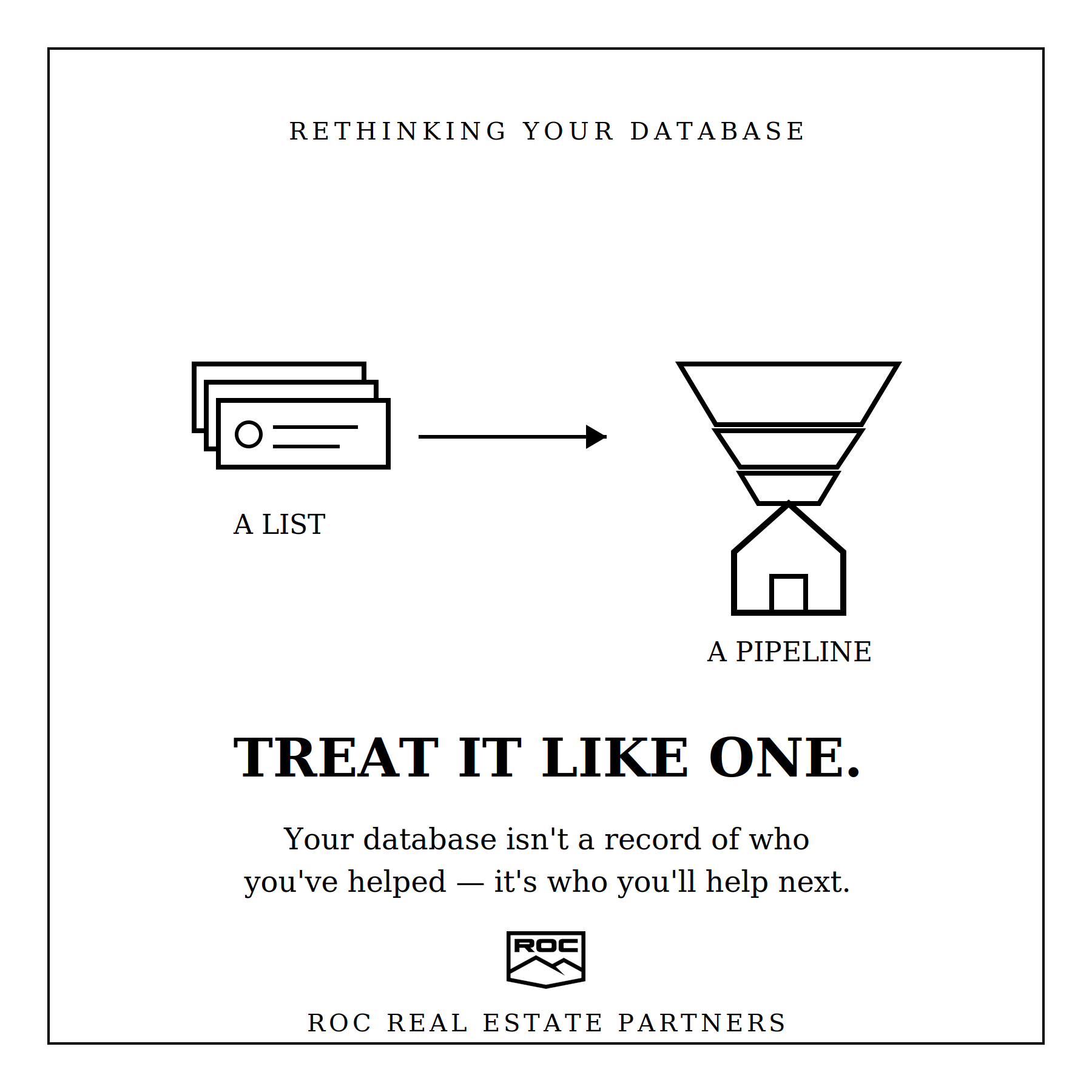
Most agents have a database. Far fewer treat it like it matters. Somewhere between the closing gift and the next transaction, that list of past clients, referrals, and old inquiries tends to get filed away and forgotten — checked only when business feels slow, rather than nurtured as a matter of habit. That's a mistake, because a well-maintained database isn't a record of who you've helped. It's a working pipeline of who you'll help next.
A contact list sits still. A pipeline moves.
The difference between the two isn't the data itself — it's what you do with it. A contact list is passive. It exists, and nothing happens unless someone happens to remember you when they're ready to sell. A pipeline is active. It gets touched on a schedule, nurtured with intention, and treated as a source of new business rather than a record of old business. The names might be identical. The results won't be.
Every name in it already knows and trusts you
This is what makes your database so valuable compared to colder lead sources. A past client already went through a transaction with you. A referral already came in with some level of built-in trust. Someone who inquired six months ago and went quiet still remembers who you are. None of these people need to be convinced you're credible — they already have a reason to think of you first when the timing is right. The only real question is whether you're still top of mind when that timing arrives.
Staying "alive" is a habit, not a campaign
A database goes cold not because the people in it stopped being potential clients, but because the outreach stopped being consistent. This doesn't require anything elaborate — a regular check-in, a market update, a simple note that shows you're still paying attention. The agents who get the most out of their database aren't running some brilliant, complicated system. They're just showing up consistently, in small ways, over a long period of time.
What this looks like in practice
Treating your database as a pipeline means reviewing it regularly, not just when business slows down. It means having some sense of where each contact stands — are they a past client, a warm referral, someone who hasn't been touched in months — and adjusting your outreach accordingly. It means tracking whether your touches are actually landing, the same way you'd track any other source of business. None of this is complicated. It's just consistent, and consistency is the part most agents skip.
The takeaway
Your database isn't a list you maintain out of obligation. It's one of the lowest-cost, highest-trust sources of listings you already have — if you treat it that way. The names are already there. The only thing separating a stagnant contact list from an active pipeline is whether you're showing up.

Ramon Casaus, Founder
Expansion Partner | ROC Real Estate Partners | eXp Realty, LLC
or another way